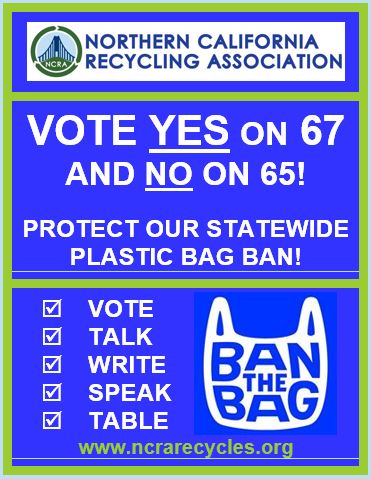
NCRA wants you! Phonebank for the Ban on Tuesday 11/1

JOIN NCRA TO PHONEBANK FOR THE BAG BAN!

Tuesday, November 1 from 6 pm – 8 pm

Click here to access Yes on 67 Phone Bank and Event List!

2150 Allston Way, Berkeley, David Brower Conference Room, 4th Floor

  • Please bring your cell phone
  • Pizza will be provided
  • BYO beverages and snacks

See you there! Thank you for your commitment to assisting our communities in upholding the bag ban!

Please RSVP to ncra@ncrarecycles.orgncra-yes-on-67-no-on-65-2016

South San Francisco Scavenger Anaerobic Digester Tour

By Greg Dudish, Dudish Consulting

Images…

On August 18, Chris of South San Francisco Scavenger took 25 NCRA members and guests on a fantastic tour of their anaerobic digestion facility. Built in 2015, the facility can process 11,000+ tons per year – using methane produced as energy for the facility and as fuel for the 10+ collection trucks.

One of the first things noticed on the tour is the space constraints. Less than 100 yards away from the digester is a parking structure and the Genentech executive building. These constraints require the facility to have a small footprint with tight odor controls while balancing the need to process as much material as possible. The SMARTFERM technology solves this balancing act.

The key to successful anaerobic digestion is the carbon to nitrogen ratio (C:N) of input material. At SSF, various feedstocks are mixed for this optimized ratio prior to digestion. Generally, brown or woody material has a high ratio and green material or food waste has a low ratio.

While waiting for an available digester chamber, the material is stored in the aeration bay. The bay is under negative pressure (i.e., vacuum) for odor control. Once added to a digestion chamber, a 21 day, 3-phase process begins.

Start: Anaerobic digestion only occurs in a specific temperature range. To bring material into this range, a heat-generating, aerobic decomposition process is started by pumping air into the chamber allowing the material to heat itself up naturally! It’s a clever solution with lower energy requirements than heating up the material with steam or hot air.

Fermentation: Once at the correct temperature, percolate with bacteria from cows’ digestive tracts is sprayed onto the material, starting digestion and producing biogas. The key indicators during fermentation is quality and quantity of methane produced. Unfortunately, high quality doesn’t occur during times of high quantity. To increase quality, CO2 and other components are filtered out.

Termination: After ~20 days, methane production has been greatly reduced and doesn’t make sense to continue. To stop the process, percolate is no longer sprayed onto the material. Air is again added to the chamber but this time to purge the chamber of methane and create a safe/non-explosive environment to open the chamber and allow the removal of digestate.

Remaining digestate is treated in an IVC (In-Vessel Composting) tunnel to compost the material. The tunnel also removes ammonia gas produced and processes it with an acid scrubber where sulfuric acid is sprayed over the gas to precipitate out the ammonia as ammonium sulfate. Scrubbed gas then passes through a BioFilter similar to the flora on a forest floor – removing odors and harmful gases – and into the atmosphere. The compost produced is screened offsite and sold to farms!

Overall, the facility is a great example of anaerobic digestion with space and odor constraints while remaining financially viable.

Although not a substitute for the tour, there is a great YouTube video summarizing the process.

ZERO WASTE ENERGY AND BLUE LINE TRANSFER AWARDED 2015 INNOVATOR OF THE YEAR

Recycling Today, 9/15/15
Zero Waste Energy (ZWE), Lafayette, California, and Blue Line Transfer Inc., South San Francisco, California, were announced as the recipient of the National Waste & Recycling Association’s (NWRA’s) 2015 Recycling Equipment Innovator of the Year for its Blue Line Biogenic CNG Facility atWaste360 Recycling Summit. The award recognizes recycling equipment designers and manufacturers that successfully challenge and advance recycling sector operations through innovation in design and manufacturing that increases the effectiveness or efficiency of recycling equipment and operations. Read more… Recycling Today
A Cautionary Tale for California

As I Walked The Streets of Laredo… [1]

By John D. Moore, NCRA Vice President and Legal Counsel, Henn, Etzel & Moore, Inc.

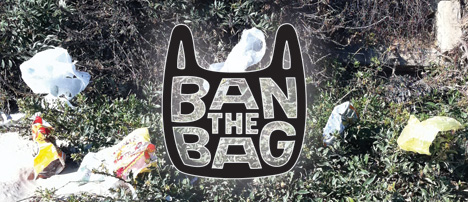
… I saw more plastic bags. That is, after a Texas appellate Court ruled recently that the City of Laredo, Texas, had no power to adopt a local ordinance banning “commercial establishments” from providing customers with single-use plastic bags. Unlike California, the Laredo ordinance did not provide for a ten cent payment to the commercial establishment. Maybe that is why the merchant groups sued. But the reasoning of the Texas court yields a cautionary tale for California.

Laredo, Texas is a home-rule city. In California this is called a “charter” city. Home rule cities are allowed extra latitude in using their police powers and may be limited by the state legislature only when the state intends to preempt local legislation with “unmistakable clarity”. A merchant group[2] sued the City to block enforcement of the bag ban. The City won judgment in its favor at the trial court. The Court of Appeal not only reversed the trial court judgment for the City, it also declared the merchants group to be the winner of the case. The appellate court remanded the case for the trial court only to award attorney fees to the merchants group.

The appellate court focused on whether the state law of solid waste disposal prevented the City from adopting a plastic bag ban. In Texas, a Texas Commission on Environmental Quality promotes regulation much like (in concept if not in practice) CalRecycle in California. The Texas state law has a very specific provision that local government may not adopt an ordinance that “prohibits or restricts” (for solid waste management purposes) the “sale or use of a container or package in a manner not authorized by state law.” There is no indication in the opinion that the state of Texas or its regulator/enforcers actually restricted the sale or use of single use plastic bags.

The appellate court found “unmistakable clarity” that the state law blocked all local ordinances concerning containers or packages. The appellate court reasoned that single use plastic bags were containers or packages with “unmistakable clarity.” This is the opposite of the trial court’s view.

The sponsor of the state law said that the local government preemption provision was intended to be limited to local laws concerning “wasteful packaging, Styrofoam cups, and bottle caps.” The appellate court did not care what the sponsor said. That is partly why legislators should say what they mean. The appellate court’s opinion is entirely based on its reading of the “plain meaning” of the preemption statute.

The Texas preemption statute forbids local regulation of the sale or use of certain materials in a mannernot authorized by state law” i.e. the use is not authorized by the state. It seems to me that if the Laredo law governed the sale or use of the single use plastic bags (used) in a manner authorized by state law, then the strict letter of the preemption statute is not applicable. Or maybe it is open to grammatical debate what was intended.[3] No Texas statute cited detailed how its citizens are to use plastic bags, except presumably not littering them.  From the opinion it seems that this argument was not made.

HERE IS THE CAUTIONARY TALE

California’s statewide plastic bag ban being challenged by referendum presently, SB 270, also contains a preemption provision, prohibiting local governments from enacting more restrictive plastic bag laws. If SB 270 were in force, then cities, including charter cities, in CA, like Laredo, would be barred from adopting more restrictive bans. It is my experience that regulated industry groups will often trade more regulation in exchange for state preemption. I understand that this dynamic cleared the way for SB 270- plus the ten cents/bag provision that helped the grocers which the bag makers are trying to take away in Proposition 65.

[1] If you don’t know the song Streets of Laredo, check out the Johnny Cash version on YouTube. For the musically inclined, think key of G

[2] If funding for the case came from plastic bag makers, the opinion does not reveal this

[3] Like the Second Amendment

Bag The Ban – By County

ncra-yes-on-67-no-on-65-2016

Please let us know what is happening in your County! Send brief updates to both Zero Waste Advocacy Committee and NCRA News. See County listings at end.

  1. Determine if local public agencies – the county, cities, special districts,agencies, etc., have policies on the two initiatives and whether help is needed establishing, supporting or refuting these policies.
  2. Tell NCRA when a speaker is needed to be present at an event where some public agency is making up its mind or thinking about changing it.
  3. Communities that already have local bag ban laws should not sit on their hands but make sure all voters know why 67 is so important and that it is at the end of a long ballot.

BY COUNTY – In progress

ALAMEDA – Contact Arthur Boone/ZWAC

SONOMA – Contact Portia Sinnott/NCRA News. At the August Sonoma County Local Task Force For Solid Waste meeting it was decided to send letters to the Board of Supervisors, the Joint Powers Agency and all cities asking each to go on record in support of 67 and against 65. The next step is for the LTF members to contact our elected officials to reinforce this request. Tabling and tabling training starts the week of 10/17. Phone banking with Clean Water Action will be encouraged.

CONTRA COSTA

MARIN

NAPA

SAN FRANCISCO

SAN MATEO

SANTA CLARA

SOLANO